Homeowners building from the ground up often seek a seamless blend of aesthetics, functionality, and future‑proofing, and the most reliable way to achieve that is by hiring custom interior design services for new homes. A tailored approach ensures every square foot reflects the owner’s lifestyle while meeting modern standards for sustainability and technology, which ultimately boosts resale value and everyday comfort. For a deeper look at how a well‑planned interior can increase property worth, see our Interior Design Trends That Increase Home Value – 2026 Expert Guide.
Understanding Custom Interior Design for New Homes
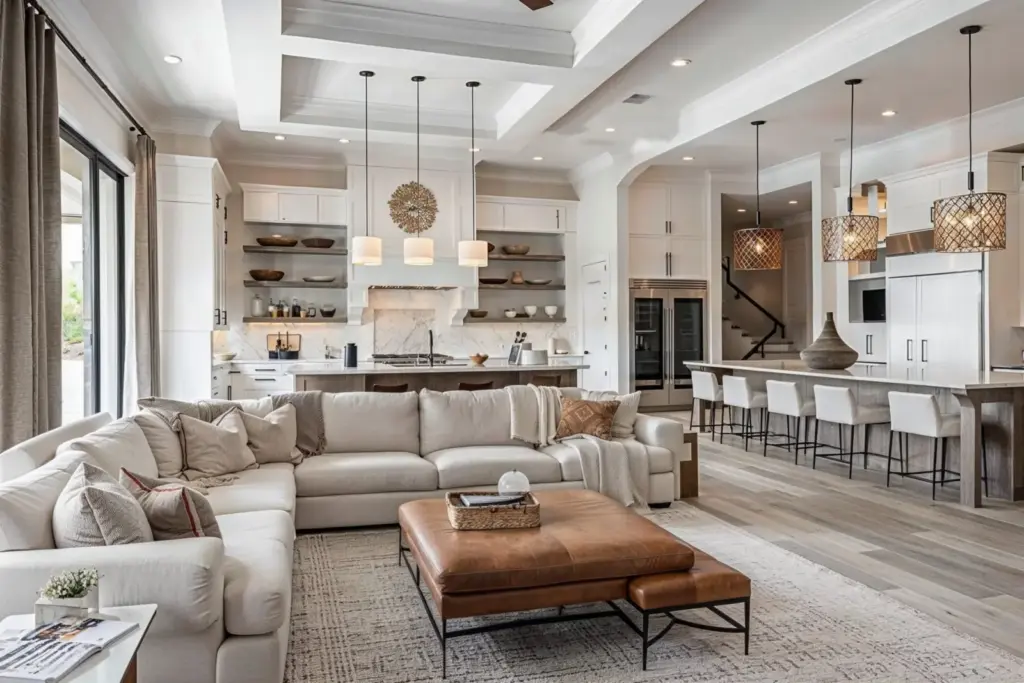
Custom interior design is more than selecting a paint color; it is a comprehensive, bespoke home interior strategy that aligns architecture, personal taste, and long‑term goals. Unlike off‑the‑shelf décor kits, a bespoke service starts with a personalized design consultation that maps the family’s routines, storage needs, and visual aspirations. The result is a cohesive environment where each room serves a purpose without sacrificing style.
Core Components of a Bespoke Service
- Space planning: Precise layout mapping to maximize flow and ergonomics.
- Material selection: Curated finishes, from sustainable bamboo flooring to reclaimed wood accents.
- Lighting design: Layered lighting schemes that adapt to different activities and times of day.
- Smart home integration: Seamless connectivity for climate control, security, and entertainment.
- Color and texture palette: Harmonized hues and tactile elements that reinforce the home’s narrative.
Why Professional Custom Services Outperform DIY Efforts
According to the National Association of Home Builders (NAHB) 2026 Home Design Survey, 68 % of homeowners who employed professional interior designers reported an average 12 % increase in resale value, compared to just 4 % for DIY remodels. Professionals bring:
Table of Contents
- Understanding Custom Interior Design for New Homes
- Core Components of a Bespoke Service
- Why Professional Custom Services Outperform DIY Efforts
- The End‑to‑End Process: From Consultation to Completion
- Incorporating Sustainable Materials and Smart Technology
- Budgeting and Cost Management for Custom Designs
- Common Pitfalls and How to Avoid Them
- Real‑World Case Study: A Suburban New Build
- Frequently Asked Questions
- What distinguishes a custom interior designer from a décor retailer?
- How long does the custom design process usually take?
- Can I incorporate my own artwork or heirlooms?
- Are sustainable materials more expensive?
- Do smart home systems require ongoing fees?
- Access to trade‑only suppliers and bulk pricing.
- Technical knowledge of building codes and structural constraints.
- Expertise in integrating emerging technologies without compromising design integrity.
The End‑to‑End Process: From Consultation to Completion
A structured workflow guarantees transparency and timely delivery. Below is a typical eight‑step roadmap:
- Initial personalized design consultation: The designer visits the site, discusses lifestyle, budget, and aesthetic goals.
- Concept development: Mood boards, 3‑D renderings, and material samples are presented for client approval.
- Detailed design documentation: Scaled floor plans, lighting schematics, and finish schedules are prepared.
- Budget refinement: Cost estimates are aligned with the client’s financial parameters (see Interior Design Cost Calculator for Home Renovation for a practical tool).
- Procurement and vendor coordination: Ordering of custom cabinetry, sustainable fabrics, and smart devices.
- Installation and project management: On‑site supervision ensures precision and adherence to timelines.
- Smart home integration: Installation of IoT hubs, energy‑efficient HVAC, and voice‑controlled lighting (refer to Smart Home Interior Design Ideas and Technology Integration – 2026 Expert Guide for cutting‑edge options).
- Final walkthrough and client handover: Review of all elements, documentation of warranties, and a satisfaction survey.
Incorporating Sustainable Materials and Smart Technology
Eco‑conscious homeowners increasingly demand sustainable materials that reduce carbon footprints while providing durability. The 2026 Green Building Council report notes a 15 % rise in reclaimed‑material usage in residential projects. Popular choices include:
- Low‑VOC paints and finishes.
- Recycled glass countertops.
- Fast‑growing bamboo flooring with a 3‑year warranty.
Coupling these choices with smart home integration creates a future‑ready residence. Sensors that adjust lighting based on natural daylight, AI‑driven thermostats that learn occupancy patterns, and automated window shades contribute to energy savings of up to 30 % (U.S. Department of Energy, 2026).
Budgeting and Cost Management for Custom Designs
Effective budgeting begins with allocating percentages of the total construction cost:
| Budget Category | Typical Allocation |
|---|---|
| Space planning & design fees | 10‑12 % |
| Materials & finishes | 35‑45 % |
| Smart home hardware | 5‑8 % |
| Installation & labor | 30‑35 % |
| Contingency | 5‑7 % |
Using a cost calculator early on helps avoid overruns. Additionally, designers often negotiate trade discounts, passing savings directly to the client.
Common Pitfalls and How to Avoid Them
- Overlooking future needs: Design with flexibility; incorporate modular furniture and adaptable lighting zones.
- Neglecting lighting hierarchy: Balance ambient, task, and accent lighting to prevent glare and under‑illumination.
- Choosing trends over timelessness: Blend contemporary accents with classic silhouettes for longevity.
- Underestimating smart system complexity: Work with a designer experienced in IoT ecosystems to ensure seamless compatibility.
Real‑World Case Study: A Suburban New Build
When the Patel family commissioned a 2,500‑sq‑ft home in Austin, Texas, they engaged a custom interior design firm to realize a “modern‑organic” vision. Highlights of the project include:
- Open‑plan kitchen featuring recycled glass countertops and a concealed induction cooktop.
- Living room equipped with a voice‑activated lighting system that transitions from bright task lighting to warm ambiance.
- Master suite designed with a built‑in wardrobe system that maximizes vertical space, demonstrating expert space planning.
- Use of reclaimed timber for accent walls, satisfying the family’s sustainability goals.
Post‑occupancy evaluation by Elite Guide to the Best Interior Designers for Luxury Residential Projects – 2026 Rankings & Insights reported a 9 % increase in the home’s appraised value and a 95 % satisfaction rating from the owners.
Frequently Asked Questions
What distinguishes a custom interior designer from a décor retailer?
A custom designer offers a holistic service—from architectural coordination to material sourcing—while a retailer typically sells pre‑designed pieces without integration into the home’s structural layout.
How long does the custom design process usually take?
For a new‑home build, the design phase averages 8‑12 weeks, followed by a 4‑6 month construction and installation period, depending on project complexity.
Can I incorporate my own artwork or heirlooms?
Absolutely. A personalized design consultation will identify focal points where cherished items can be showcased without disrupting the overall aesthetic.
Are sustainable materials more expensive?
Initial costs can be slightly higher, but life‑cycle savings from durability and energy efficiency often offset the upfront investment within 5‑7 years.
Do smart home systems require ongoing fees?
Most platforms operate on a one‑time purchase model; however, subscription services for advanced security monitoring or cloud storage may apply.
Choosing custom interior design services for a new home is an investment in quality, functionality, and future resale potential. By partnering with seasoned professionals, homeowners can transform a blank canvas into a personalized sanctuary that embraces sustainability, technology, and timeless style.
